Advanced Composite Integration and Airframe Reinforcement
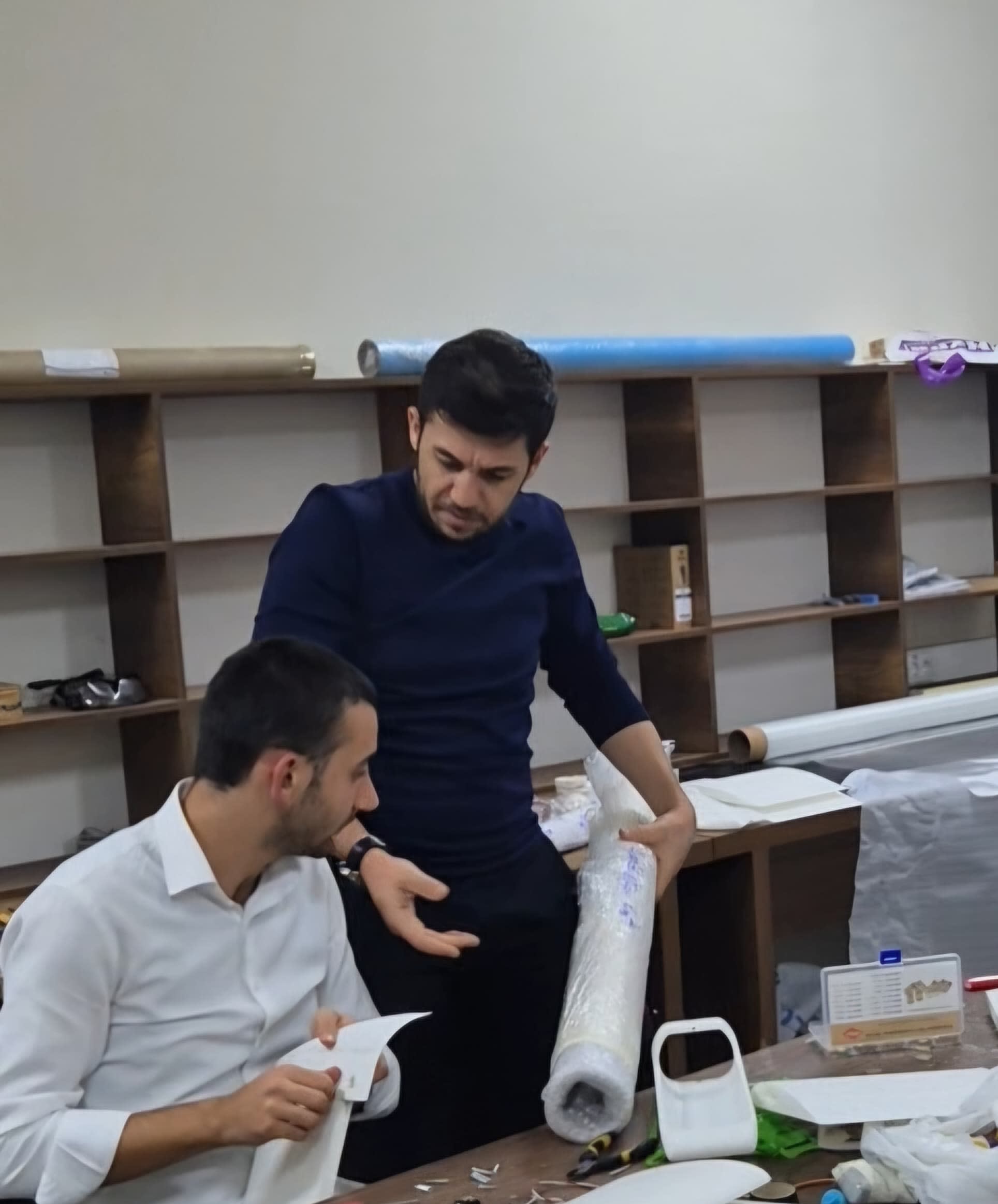
I. Master-Apprentice Workshop with Mentor M. Talha ÇİÇEK The primary focus of the week was transferring professional aviation discipline to the workshop environment. Mentor M. Talha ÇİÇEK provided hands-on training to the students on composite curing processes, the precision of resin-to-fiber ratios, and critical surface preparation. Surface Preparation: Under the supervision of our mentor, mechanical abrasion and chemical cleaning processes were performed to ensure perfect bonding between the 3D-printed surfaces and the composite resin. II. Hybrid Airframe Lamination Reinforcements were applied to the aircraft's critical load points, specifically the wing spar attachments and the motor mount area. Ply Orientation: Mentor Talha ÇİÇEK personally demonstrated how fiber orientations (0°, 45°, 90°) affect structural integrity, optimizing the fuselage's torsional and flexural resistance. Vacuum Bagging Prep: Preliminary steps were taken for vacuum bagging techniques to achieve aerospace-grade surface quality and structural consistency. III. Balancing Weight and Durability The impact of the composite application on the aircraft's total weight was measured meticulously. Following Mr. Çiçek's "minimum resin, maximum strength" philosophy, we managed to increase the airframe's durability by approximately 40% while maintaining the target empty weight.